
Directional Signs
Point People in the Right Direction With Fully Customizable Directional, Wayfinding, and Arrow Signs
What are Directional Signs?
Providing clear and easy-to-understand directions through signage is essential to creating a positive experience for visitors. The purpose of directional, wayfinding, and arrow signs is to guide people to their destinations as efficiently and intuitively as possible.
Directional signs help visitors locate restrooms, find parking areas, identify exits, or navigate toward the main office, among many other practical uses. These signs can be fully customized to suit your space and needs, whether as aluminum signs, yard signs, or any other format that best supports your directional signage requirements.
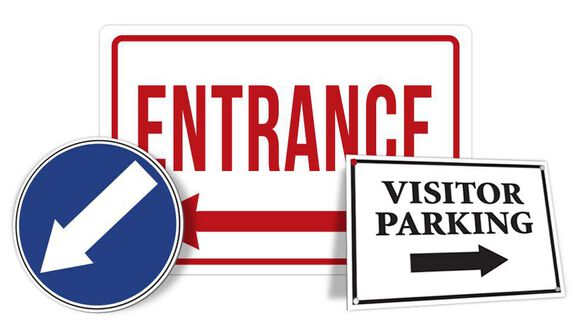
Types of Directional Signs
Aluminum signs are the most common choice for directional, wayfinding, and arrow signage for both indoor and outdoor use. Brushed aluminum arrow signs provide a sleek, effective way to guide people inside buildings, while reflective aluminum signs ensure clear visibility outdoors.
Aluminum
Our aluminum signs are 2 mm thick and are perfect for long lasting indoor and outdoor directional signs.
Yard Sign
Made from corrugated plastic, our yard signs are affordable, versatile, and easy to place.
Rigid Plastic
Plastic material offered in either a .12” or .24” thickness. Can be hung, mounted, or placed as a display.
Acrylic
Durable, glass like material offered in two thicknesses. Mounted with beautiful standoffs or with screws.
Brushed Aluminum
These 3 mm signs look great and stand the test of time and beauty. Mounted to rigid surfaces.
Floor Decal
Removable floor stickers made from 3.5 mil vinyl with laminate coating. Cal last up to 180 days with care.
A-Frame
Standard, non-removable graphic or premium, removable graphic. These 24” X 36” signs simple and effective.
Reflective Aluminum
Strong, 2 mm outdoor signs that are highly visible at day or night.
Common Uses
Directional, wayfinding, and arrow signs serve a wide range of purposes beyond simply pointing the way. These signs are strategically placed to provide clear guidance for both permanent and temporary needs. Whether you want to help visitors locate your store, guide guests to an event, or improve navigation throughout your property, directional signage plays a key role in creating a smooth and pleasant experience.
Directional and directory signs are especially important in places such as churches, libraries, schools, businesses, offices, and other public buildings. Properly designed wayfinding signage enhances organization, reduces confusion, and ensures visitors can easily find their destinations. The descriptions below highlight the most common and effective uses of directional, wayfinding, and arrow signs.
Restrooms
One of the most common uses for directional signs is to point to restrooms. You know how it goes—you’re in a store or restaurant and feel the need coming on. It is so much nicer when there is a clearly visible sign mounted high pointing the way to the restrooms rather than finding an employee to ask where to go. A well placed directional sign for restrooms makes guests feel more comfortable during their time with you.
Wayfinding
Wayfinding signs are generally grouped together in a system of signs that direct people through a space. These signs include maps and directories, directional and arrow signs placed strategically throughout the area, and room identification signs or labels. We will discuss wayfinding sign systems in greater detail below.
Real Estate
Directional and arrow signs are frequently used in the real estate industry to guide drivers and pedestrians to the address of the home or property for sale or rent. These signs are frequently yard signs made from corrugated plastic as they are easy to move around and are inexpensive to duplicate. Homeowners and realtors alike use directional yard signs to guide to an open house or to view the property. A-Frame signs and aluminum signs in a rigid steel frame are also great sign options posting signs on street sides to direct drivers and pedestrians in the right direction.
Events
Directional and arrow signs at events are critical. An event that provides clear directions will be more successful than an event with poor signposting. Examples of events where directional signs are especially useful are conferences, fairs, trade shows, large fundraising events, marathons & other races, and concerts. Yard signs, floor decals, A-frames and aluminum signs are great mediums for directional signs at these events. You can even create great directional signs from our banners for events. Post signs that point people to event parking, ticketing or registration, and restrooms. You may want to also post signs that guide people to other important waypoints at the event location. As a side tip, Yard signs and aluminum signs work great for personal events like yard sales, garage sales, and showers.
Office & Business
Guiding people around your office with directional signs is important—especially for visitors who aren’t familiar with the layout of the building. You can also place directional signage outside your building directing visitors to the reception desk, guiding to parking, or showing curriours the way to shipping & receiving. If the building is large and has multiple businesses or offices using the same building, having a well placed directory at the entrance of each floor makes it easy for guests to navigate to their destination. Posting entrance, exit, and restroom signs eliminates confusion for people using the building. Refer to your local building codes about requirements for exit, entrance, and restroom signs.
Best Ways to Post Your Directional Sign
Providing easy-to-read directions is wonderful, but with so many options available, what is the best way to make your sign effective for people to get where they need to go? Here are a few tips to help you place directional signs where they will be most useful.
Visibility is Key
Post signs on walls or in areas where they can be easily seen and will give the person plenty of notice of the direction they need to go, especially if the person will need to turn around a corner. You don’t want to frustrate guests by having your directional signs obstructed by objects that make it difficult to see the sign. Before you mount your sign (either indoor or outdoor), stand back several feet and look at all the possible directions people will be traveling from to see if the spot where your sign will go is easily visible.
Use Simple Design Elements
Design you sign to include arrows and words. You don’t want to overcomplicate this, but a simple message such as “food this way” with an arrow will tell people what they should be looking for as well as the direction they need to go. You can also get creative by using floor decals with arrows or footprints to guide people in the right way!
Know Your Directional Sing Needs
Use as few signs as possible that clearly point where people need to go. Decide whether your sign needs to be permanent or temporary. For example, directional signs within a building are frequently mounted permanently using standoffs, screws, or adhesive. You can also make good use of temporary directional signs by pointing guests to seating at a restaurant with a high quality A-Frame sign or showing customers where special sales are happening in your retail location. Standoffs, screws or adhesive work great to mount signs to walls. Yard signs and A-frame signs can be easily posted on the side of roads and sidewalks for temporary use.
Designing a Strategic Wayfinding Plan
Wayfinding signs are very important to guide people around an unfamiliar place. For large buildings, parks, events and other large areas you’ll want to create a wayfinding plan that effectively communicates directions so that people don’t get lost in an unfamiliar location.
Creating a wayfinding system that is effective requires signs that are consistent in material, color, and font. For example, if your directory is in brushed aluminum, you should create bathroom signs and other door signs in brushed aluminum as well to make it easier for guests to navigate with the signs. You’ll need to show information that is relevant to the building or area such listing landmarks or specific departments or areas in your signs. Wayfinding signs should be free from elements or images that would distract from giving clear directions.
Let's Create Something
Together
At Signs Dealer, we help you design and create custom signs that highlight your brand with professionalism and style. From concept to installation, our team ensures every sign reflects your vision and leaves a lasting impression.
contact@signsdealer.com